Retreat to paradise
One of your new Town Councilors wants Wakefield to be more like Lexington, Northampton and Georgetown. Another would like the Council to think about “scaling back” the public’s online access to meetings via Zoom.
And although the “T” word was never uttered, most councilors are very worried about “what’s going on in Washington” and how that could impact grants and other funding, including federal dollars that are funneled through the state.
This all came to light at a special meeting of the Town Council held on Tuesday, May 20, in the first-floor conference room at Town Hall. This space used to be known as the “Selectmen’s Meeting Room,” before we realized that “selectmen” was a bad word.
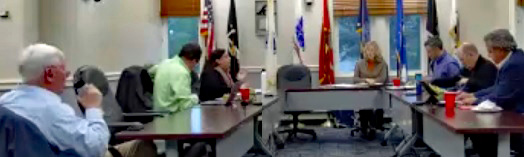
The very special meeting was called by Town Council chair Mehreen Butt. (“Chairman” is now also a forbidden term, whether the holder of the position uses “she/her” or “he/him” pronouns).
The meeting agenda had only one item listed: “Town Council Goals and Priorities for 2025-2026.”
This kind of annual “brainstorming” session is very much in vogue among municipal boards and is often referred to as a “retreat.” The School Committee has been doing retreats for years. For a time, retreats were also an annual rite of the Town Council, until last year’s chairman, Mike McLane, nixed such feel-good exercises.
But happy days are here again and so are retreats – in practice, if not in name.
Several councilors mentioned economic development as a priority. John Crisley wondered if Wakefield had ever considered what he called the “marketplace model” like what was done in Northampton, where that city purchased an old four-story factory building and hired a developer to turn it into multiple commercial spaces for “mom and pop” shops.
Town Administrator Steve Maio wondered where Wakefield would get the money, even if such a building were available for the town to purchase.
Another topic of discussion centered around getting the Housing production Plan done. Councilors Jonathan Chines and John Crisley talked about the need for more “affordable housing” for “vulnerable populations.”
Councilor Doug Butler inserted a note of caution.
“Do we really want more affordable housing?” he wondered, questioning “this fixation we have on trying to develop our way out of a problem. We have to look for economic development in town outside of housing.”
Single-family homes are apparently problematic as well, as Crisley talked about wanting to “get away from just single-family housing.” He also asserted that traffic congestion is driven by building more housing that is “car-dependent.”
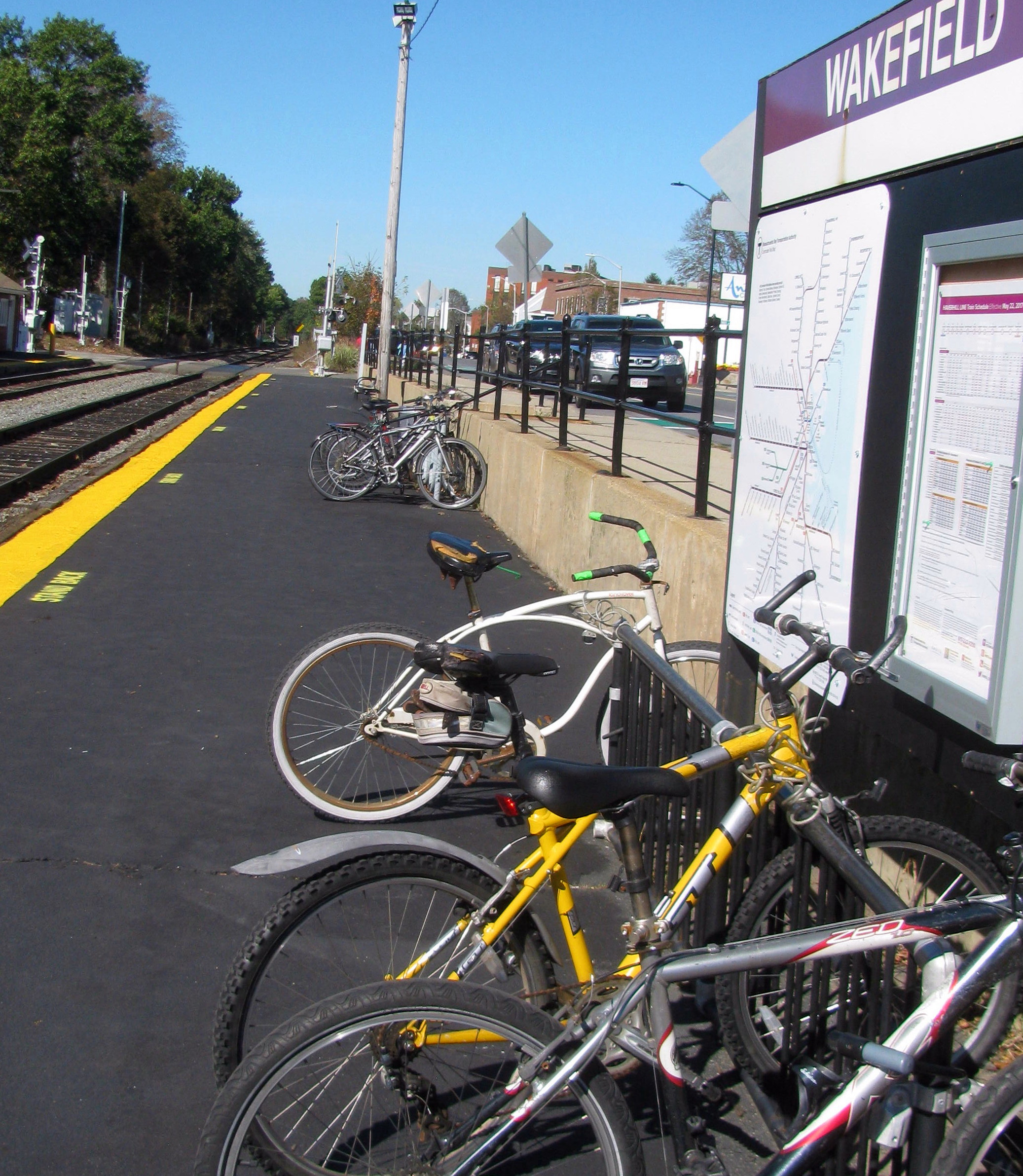 Transportation was another hot topic. Crisley would like to hire a new Town Planner with a transportation planning background. He talked about taking the town’s Bicycle and Pedestrian Plan “to the next level.” He applauded the example of Georgetown, which recently installed new “walkability signage.”
Crisley also maintained that having a bike network in town would result in less automobile traffic. He spoke with admiration of Lexington, where on any given weekend “whole families” can be seen bicycling in the town center.
Once again, Butler tapped the brakes.
“Let’s not pretend we’re Arlington or Lexington,” he said. “Everybody drives. We’re not moving off that.”
Councilor John Carney agreed. “This is all being designed around individuals who want to avail themselves of riding their bikes anywhere they want to,” he said.
On another subject, Carney opined that “public participation” at committee meetings had gotten a little out of hand. New Town Councilor Stacey Constas said that she was surprised to learn during her Open Meeting Law training that town boards and committees don’t have to make all their meetings available online via Zoom.
“We may want to rein that in a little bit,” she said. “If people want to attend meetings, they can come and sit at the table.”
The Commission on Disabilities may have some thoughts on that.
—
[This column originally appeared in the May 29, 2025 Wakefield Daily Item.]
Filed under: Columns & Essays, Humor, News, Opinion, Politics, Wakefield | 1 Comment
Tags: affordable housing, bicycle network, Disabilities Commission, economic development, Georgetown, goals, Housing Production Plan, John Crisley, Jonathan Chines, Lexington, marketplace, Massachusetts, Mehreen Butt, Michael McLane, mom and pop, Northampton, Open Meeting Law, priorites, public participation, retreat, selectmen, single-family home, Stephen Maio, Town Council, Town Planner, traffic, transportation, Wakefield MA, Wakefield School Committee, Washington DC, Zoom
 Mark Sardella
Like what was done in Northampton, where that city purchased an old four-story factory building and hired a developer to turn it into multiple commercial spaces for “mom and pop” shops. Wow….. First and foremost, there never were factories in downtown Northampton… While it would expand twice, McCallum’s Dry Goods store built the initial building and opened in 1873. Northampton at the time was industrial, with silk and brooms being the major industries, with the brooms being made out of locally grown corn. Northampton’s industrial base evaporated when nylon replaced silk and plastics replaced broom corn, but it still was at the intersection of three major roads, not to mention the location of the county courthouse, and McCallum’s became a department store. McCallum’s closed circa 1970 and the building was vacant for several years. Two then-thirty-something brothers named Thorne, and their wives, purchased the building in 1977 for what would be $2.8M today and they, not the City, developed Thornes Marketplace as an indoor mall for small retailers.
The difference between Northampton and Wakefield is where Wakefield has the lake, Northampton has Smith College and 2,785 college students with money to spend. It’s the same distance from downtown as the lake is, and did I mention that there is a five-story parking garage literally connected to Thornes Marketplace via a second story bridge? Northampton also has an old railyard, a block from downtown, that the city made into a parking lot. But Thorne’s Marketplace works because there are 2,785 college students two blocks away. Wakefield doesn’t have that — and something like Thorne’s wouldn’t work here.