Designing density
We haven’t seen this level of hubris in an elected board since the Wakefield School Committee got rid of the Warrior logo even as a solid majority of residents voted in favor of keeping it.
Now, the Wakefield Planning Board is doing its best to ignore the huge public outcry against its plus sized MBTA Communities Multifamily Zoning compliance plan.
The Planning Board has rightfully been taking the bulk of the heat for creating their outsized multifamily housing district, but there’s plenty of blame to go around for this impending calamity.
 The Planning Board went way beyond the state mandate when designing a compliance plan for Wakefield. But their expanded plan wouldn’t exist at all without the Massachusetts Legislature, which decreed that all MBTA communities must create a zoning district near public transit where multifamily housing can be built as of right (meaning no Special Permits or other relief needed from the Zoning Board of Appeals).
The Wakefield Planning Board just decided to supersize it, despite the vocal public opposition that has dominated all four public meetings held to discuss the plan.
Continue reading ‘Designing density’
Filed under: Columns & Essays, Humor, News, Opinion, Politics, Wakefield | 3 Comments
Tags: buildings, elections, houses, Humor, legislature, mandate, Mark Sardella, Massachusetts, MBTA, Multifamily district, Opinion, Planning Board, Politics, public opinion, School Committee, Town Meeting, voters, Wakefield Daily Item, Wakefield MA, Wakefield Warrion, Warrior logo, zoning, Zoning Board
Zoned out
While you’ve been busy arguing over whether Donald Trump or Joe Biden is the worse tyrant, our local mandarins have been busy pushing a new zoning bylaw that will alter the complexion of the town. If they can get it through the spring Annual Town Meeting, it will be an even bigger boondoggle than the Specialized Energy Code that they rammed through at last fall’s Town Meeting on a Saturday before most people had finished their morning coffee.
The local activist class knows that most people are either too busy or too lazy to attend Town Meeting. So, if they can just convince a hundred or so of their “allies” to bring their knitting to the Galvin Auditorium for a few hours and raise their hands at the appointed time, they can get the town to adopt almost any cockamamie measure.
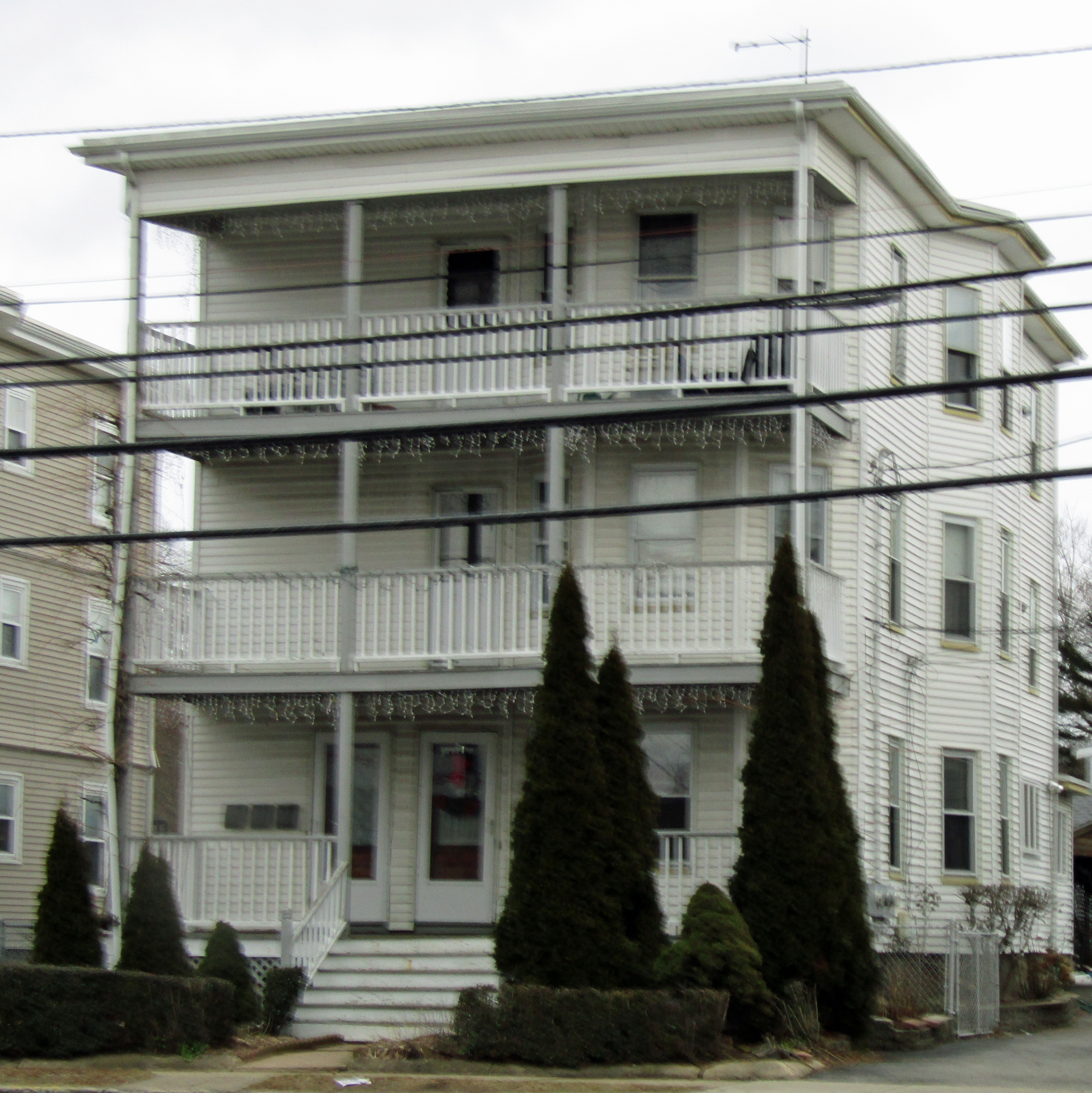 Our central planners are hoping to drag enough people to the 2024 Annual Town Meeting to approve their scheme to make it even easier than it is now for developers to build new multifamily housing in Wakefield.
Chapter 40A of the Massachusetts General Laws inludes a new state mandate that forces all Massachusetts communities with MBTA service to create at least one zoning district near public transit where multifamily housing is allowed by right.
Continue reading ‘Zoned out’
Filed under: Columns & Essays, Humor, News, Opinion, Politics, Wakefield | 2 Comments
Tags: activists, Chapter 40A, Climate Change, developers, district, Donald Trump, EOHLC, housing, Humor, Joe Biden, mandate, Mark Sardella, Massachusetts, Massachusetts General Laws, MBTA, multifamily, Opinion, Planning Board, Politics, public hearings, Section 3A, Specialized Energy Code, three-story, Town Meeting, triple decker, voters, Wakefield Daily Item, Wakefield MA, zoning
Human rights or resources?
The Wakefield Human Rights Commission (WHRC) has decided how it will respond to future human rights atrocities such as the Oct. 7 Hamas attack that killed more than 1,200 Israeli civilians, including infants and children.
It will provide “resources.”
This decision stemmed from questions raised in The Wakefield Daily Item regarding the absence of a WHRC response to the cold-blooded and barbaric attacks by Hamas.
Nobody would have even noticed the lack of a local response to these atrocities halfway around the world if the WHRC hadn’t assumed a front and center role in staging a “Vigil for  Peace and Solidarity” on Wakefield Common following the 2019 massacre at two mosques in New Zealand that killed 51.
Now, in the wake of the recent criticism, the WHRC has sought to downplay its role in that 2019 vigil, claiming that the WHRC merely signed on to the event that was put together by the local Clergy Council. But contemporaneous press releases, social media posts and a videorecording of the 2019 vigil tell a different story, clearly showing that the WHRC’s involvement was central.
Continue reading ‘Human rights or resources?’
Filed under: Columns & Essays, Community, Opinion, Politics, Wakefield | 4 Comments
Tags: atrocities, Chabad of the North Shore, Gaza, Hamas, Hamas attacks, Holocaust, human rights, Israel, Jessica Sutich, Jewish, Jews, Mark Sardella, Menorah Lighting, New Zealand, Oct. 7, Open Meeting Law, Opinion, Palestine, Palestinians, Politics, resources, Sherri Oken, terrorist attack, Vigil for Peace & Solidarity, Wakefield Daily Item, Wakefield Human Rights Commission, Wakefield Town Council, WHRC
Do the right thing
 Last Thursday’s public menorah lighting ceremony drew the largest crowd ever for this annual public celebration on the Common to mark the start of Chanukah.
It was a heartening response in the wake of the horrific Oct. 7 massacre of more than 1,200 Israelis by the terrorist group Hamas. Most of the victims were civilians and many were children. The barbaric attack has been followed by hate marches and other displays of anti-Semitism on college campuses and in major cities.
Continue reading ‘Do the right thing’
Filed under: History, News, Opinion, Politics, Wakefield | 1 Comment
Tags: anti-Semitism, Chabad of the North Shore, Chanukah, colleges, Hamas, Hanukkah, human rights, Human Rights Commission, Israel, Jewish, Jews, lights, Mark Sardella, massacre, menorah, New Zealand, Opinion, Palestine, rabbi, terrorism, university, Wakefield, Wakefield Daily Item, WHRC
Sore losers

As everyone knows by now, the Massachusetts Department of Environmental Protection has overturned the Wakefield Conservation Commission’s denial of Northeast Metro Tech’s plan to build a new vocational high school
The decision means that NEMT can now proceed with plans to build a much-needed new regional vocational high school on a wooded parcel across Hemlock Road from the current school.
MassDEP’s decision to allow the Voke to go forward with its plans to build a new school was not surprising. It was rooted in science and facts.
It’s a shame that the environmental activists who opposed NEMT’s plan can’t accept the decision with a touch of grace. But humility and decorum are not in their DNA. Instead, the “Save the Forest” gang have responded with their standard cocktail of slanderous vitriol and supercilious acrimony.
Continue reading ‘Sore losers’
Filed under: Columns & Essays, History, Humor, News, Opinion, Politics, Wakefield | 1 Comment
Tags: activists, appeal, ConCom, corruption, election, environment, forest, high school, injunction, Mark Sardella, MassDEP, Middlesex Superior Court, NEMT, Opinion, Politics, Save the Forest, slander, trade school, treesNortheast Metro Tech, vocational school, Voke, Wakefield Conservation Commission, Wakefield Daily Item, Wetlands Protection Act, woods, Zoom
The wrong track

The idea that if you create more housing near public transportation the masses will give up their cars and flock to the infinitely superior public transit system is an unquestioned article of faith amongst our collectivist cognoscenti.
Do these “folks” know any actual Americans?
Continue reading ‘The wrong track’
Filed under: Columns & Essays, Community, Humor, News, Politics, Wakefield | 3 Comments
Tags: 40A, Americans, automobiles, bicycles, bus, business, cars, central planning, Climate Change, collectivism, commuter rail, density, depot, district, downtown, education, Farmland, gridlock, Henry Ford, housing, Humor, Mark Sardella, Massachusetts, MBTA, Model-T, multifamily, Opinion, parking, Politics, public, public transit, Range Rover, school, shopping, station, SUV, traffic, train, transportation, triple decker, Wakefield Daily Item, Wakefield MA, Wakefield Planning Board, walking, zoning
Thickly settled
If there’s one thing the public has made abundantly clear of late, it’s that they hate overdevelopment and especially all the new multifamily housing being built around town.
The discussion of overdevelopment dominates conversation in the public square, the local coffee shops and on social media. It’s a far greater concern than potholes or a few trees being cut down to build a new school.
The Zoning Board of appeals has gotten the message. Last week they took advantage of a “Safe Harbor” provision in state law to try and halt a 100-unit 40B proposal on Nahant Street.
 But now, a new state Zoning Act will require MBTA communities (like Wakefield) to create at least one zoning district near public transit in which multi-family housing is allowed as of right. “As of right” means that a developer won’t have to bother obtaining a Special Permit, variance, zoning amendment, waiver, or other zoning approval from the town. He can just go ahead and build.
Continue reading ‘Thickly settled’
Filed under: Columns & Essays, News, Opinion, Politics, Wakefield | 1 Comment
Tags: affordable housing, Anne Danehy, building, by right, Chapter 40A, construction, density, development, district, Edward Dombroski, EOHLC, Erin Kokinda, globalism, Greenwood, housing, Jim Hogan, Jonathan Chines, Julie Smith-Galvin, Mark Sardella, Massachusetts, MBTA communities, Michael McLane, multi-family, Opinion, over-development, overdevelopment, Politics, population, residential, units, Wakefield Daily Item, Wakefield MA, West Side, zoning
Happy real Columbus Day!

Today, October 12, is traditional Columbus Day. It was 531 years ago today that the Genoese explorer became the first European to set foot in the Western Hemisphere.
No big deal, according to those who want to cancel Christopher Columbus because he violated “norms” that the world wouldn’t discover for another half millennium. The cancelers are sure that, if only they had been around in 1492, they would have known better. No, they wouldn’t have. And they wouldn’t have sailed across the ocean in wooden ships and discovered the New World either.
But more than five centuries later, they’re still trying to discredit that accomplishment because Christopher Columbus lived before the Age of Enlightenment and his attitudes and behaviors comported with those of his 15th century contemporaries. How dare he not share our 21st century values!
But the real reason that Columbus is reviled is because his discovery set in motion events that eventually resulted in the United States of America. To some, that is the most unforgivable sin of all.
 That’s what all this anti-Columbus stuff is really about. It’s not about celebrating Indigenous Peoples, Native Americans, First Peoples or whatever term is in vogue this week. It’s about delegitimizing the United States.
The history of human beings on planet earth is the history of exploration and conquest. It hasn’t always been pretty. But only one country is ever held to account for it.
I love Columbus Day because it reminds me of a bygone era before little children were taught that they live on stolen land and are descended from genocidal oppressors. Must do wonders for their social emotional wellness.
The myth that the North American continent was a peaceful paradise populated by native tribes living in harmony before the Europeans arrived is just that – a myth. Warfare between Indian tribes was a way of life in North America long before Columbus arrived. So was human sacrifice and slavery.
“Not all Indians lived in a continual state of intertribal war,” wrote historian Samuel Eliot Morison in his Oxford History of the American People, “but war was part of the social pattern. Any Indian group that tried to shift its dominant values from war to peace was doomed to extinction by another.”
That is not to absolve Europeans and their American descendants of all transgressions against Native Americans. But the idea that Europeans introduced brutality to the New World is as much a fairy tale as any fanciful story about the Nina, the Pinta and the Santa Maria.
Columbus was from Genoa, in northern Italy. Columbus Day means a lot to Italian-Americans, who, not so very long ago were actually seen as a disadvantaged group that faced real discrimination.
 For that reason, President Franklin D. Roosevelt created the first federal observance of Columbus Day in 1937 to recognize the contributions of Italian-Americans and to assure them of their rightful place in American history.
“We are celebrating today the exploit of a bold and adventurous Italian,” FDR said, “who with the aid of Spain opened up a new world where freedom, tolerance and respect for human dignity provided a refuge for the oppressed of the Old World.”
Eighty-six years ago, even progressive icons like FDR believed that. Today, those words would be grounds for impeachment.
Legislation to create Columbus Day as an official federal holiday was signed by President Lyndon Johnson on June 28, 1968, to be observed on the second Monday in October beginning in 1971.
But in short order, the revisionist historians began the slow, gradual process that will result in the eventual erasure of Christopher Columbus from all of history. Last year, the Wakefield Public Schools official Calendar changed the holiday to “Columbus Day/Indigenous Peoples Day.” I’m shocked that they gave Columbus top billing.
But old Christopher won’t have to share the spotlight for long. In due course, his name will be removed altogether.
Baby steps.
Like Rome, America wasn’t built in a day. Dismantling her will take time as well. Sadly, that process is well underway.
—
[This column originally appeared in the October 12, 2023 Wakefiekd Daily Item.]
Filed under: Columns & Essays, History, Humor, Opinion, Politics, Wakefield | 3 Comments
Tags: America, cancel culture, Christopher Columbus, Europeans, exploration, FDR, Genoa, History, Humor, Indians, Italians, Italy, LBJ, Mark Sardella, Native Americans, New World, Oct. 12, Opinion, politicsColumbus Day, Samuel Eliot Morison, United States, Wakefield Daily Item, Wakefield MA
Idle thoughts

For sheer entertainment value, last week’s Wakefield Town Council meeting had it all: pathos, bathos, drama and farce.
And they say there’s nothing good on TV anymore.
Let’s dive right in with the most contentious issue of the evening.
Chairman Jonathan Chines  had ordered eight “NO IDLING” signs to be put up on Main Street along the Lake to prevent anyone from enjoying the idyllic scene while sitting in their car with the engine running. More than a few citizens, including several Town Councilors, couldn’t help but notice the curious timing. The signs went up right after those same Town Councilors had pushed back against a plan, supported by the Chairman, to eliminate all parking along the Lake in favor of bike lanes.
Chairman Chines admitted that he acted in the context of the recent discussion of a proposed bike and pedestrian path along the Lake. He had the “NO IDLING” signs put up, he said, because Lake Quannapowitt is an ecologically sensitive area.
 Is the senior citizen couple sitting in their Buick with the heat on while enjoying a cup of Honey Dew coffee and the Lake view really a major source of pollution when there’s a six-lane interstate highway a stone’s throw away?
In any case, it turned out that the Chairman didn’t have the legal authority to unilaterally dictate the installation of any signs.
The “NO IDLING” signs have since come down because there are a few members of the Town Council who still think that consistency, transparency and process matter, not to mention a little thing called democracy. Remember, it was Chairman Chines who recently decided to keep several flag requests that he didn’t like off the Town Council’s agenda.
Another topic at last week’s meeting also concerned the Lake. The Town Council heard about plans to place a man-made, floating vegetated island in the middle of Beebe Cove. The fantasy island idea came about as a grant proposal under the Metropolitan Area Planning Council’s “Climate Resilience Program.” The presentation at the meeting included some of the most amazing word salads in the history of climate alarmism.
The MAPC grant program is intended to “fund actionable interventions that facilitate long-term innovation changes that advance climate equity, regional coordination, and social cohesion.”
If you don’t know what “climate equity” is, I believe it’s something like “environmental justice.” I hope that clears things up.

Another goal of the program is “to provide an educational space to increase public dialogue and engagement while simultaneously creating a visually impactful art installation that is free and accessible to all members of the public.”
And with the “NO IDLING” signs gone, cars will now be able to park along the Lake, engines idling, as their occupants admire this floating monument to climate equity.
Another agenda item on last week’s Town Council agenda was the plan to construct a new restroom facility at Veterans Field. The new loo by the Lake will need a name, and of course your Town Council is right on top of the naming issue as well. At the very same meeting, the Council passed a new Asset Naming Policy to govern the future naming of town-owned buildings and other “assets.”
I would like to submit a modest proposal that we forgo naming the overall bathroom structure and instead name each of the two restrooms that the building will house.
In the spirit of equity and inclusion, I propose naming one restroom “Men” and the other “Women,” in memory of the genders, with commemorative plaques displayed on each of the doors.
I believe my suggestion fulfills the first priority under the new Asset Naming Policy, which states: “Priority should be given to names carrying geographic, historical or cultural significance to the Town as a whole or to the area in which the public asset is located.”
I don’t think anyone would deny that men and women have played historically and culturally significant roles in the town of Wakefield. As to the geographic area, men’s and women’s softball teams have long competed on Veterans Field. What better way to memorialize the contributions of all men and women than to name these new restrooms in their honor.
I look forward to the public hearing on my proposal.
—
[This column originally appeared in the September 21, 2023 Wakefield Daily Item .]
Filed under: Columns & Essays, Humor, News, Opinion, Politics, Wakefield | 3 Comments
Tags: bathrooms, bicycle path, bike lanes, cars, Climate Change, climate equity, cultural, democracy, education, environmental justice, floating wetland island, historic, Honey Dew, Humor, Jonathan Chines, Lake Quannapowitt, MAPC, Mark Sardella, men women, No Idling, Opinion, parking, Politics, resilience, restrooms, Route 128, Route 95, signs, Town Council, transparency, Veteran's Field, Wakefield Daily Item, Wakefield MA
Voke truthers

Can we get a few things straight once and for all regarding the new Northeast Metro Tech building project?
First, the site that the school would be built on is not protected land, despite what the “Save the Forest” activists would like you to think. Nor is it part of Breakheart Reservation, although you could easily get that impression listening to the activists. And they are perfectly happy to let you believe that.
In truth, the 13-acre, wooded hilltop site across from the current NEMT campus is property that is owned by the school. Its environmental significance does not rise to that of the Amazon Rain Forest as the activists would have you believe.
Continue reading ‘Voke truthers’
Filed under: Columns & Essays, Humor, Nature & Wildlife, News, Opinion, Politics, Wakefield | 4 Comments
Tags: activists, Amazon Rain Forest, ANRAD, Breakheart Reservation, building project, campus, conspiracy, democracy, education, election, forest woods, Humor, Mark Sardella, Massachusetts, NEMT, Northeast Metro Tech, Opinion, Politics, Save the Forest, school, students, Town Meeting, trade school, trees, truthers, vocational school, Voke, vote, Wakefield Daily Item, Wakefield MA, Wakefield Town Council


