Summer climate alert!
As we sweat our way through yet another “hottest summer on record,” it is important to remember one thing: it’s all our fault.
If we hadn’t defiled Mother Earth with our damnable human penchant for invention, technology and civilization, the planet would have remained a Garden of Eden with a temperature that’s 1.5 degrees cooler than it is today.
If we hadn’t burned enough fossil fuels to enable us to keep the lights and heat on 24/7 in hospitals and research laboratories, if we hadn’t invented the internal combustion engine, enabling us to move food and other necessities of life to where they are needed, imagine the paradise we’d be living in!
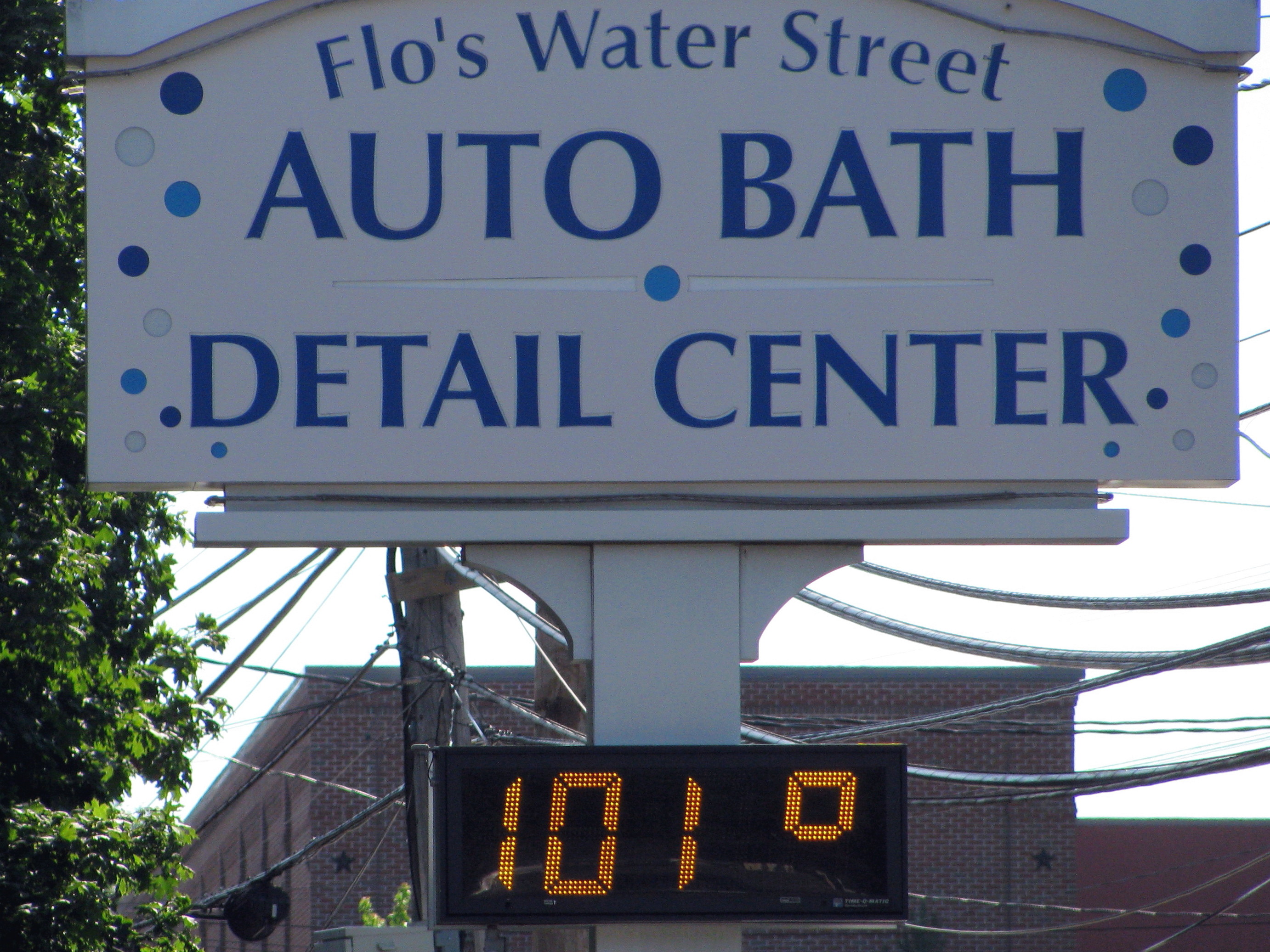 We are constantly bombarded with hysterical news that the region, country, hemisphere or planet is currently experiencing the hottest week, month, season, year or decade on record – whichever geographic area and/or time period can be manipulated to produce the direst measurements and justify the most apocalyptic warnings.
Every time there is an unseasonably warm week, month, season or year anywhere on earth, it is cited as prima facie evidence of our self-imposed march toward global incineration.
But when skeptics (aka “deniers”) point to a cooler period, like the summer of 2007, when average daily high temperature for July was only 77.6 degrees, almost 4 degrees below the normal average high of 81.4 and the average mean temperature for the Boston area was 3 degrees below normal – well, that’s just weather, silly.
Just as extreme heat is nothing new, neither is extreme cold or extreme wet or extreme dry. The earth has seen it all, since long before human industry started belching tons of evil carbon dioxide into the atmosphere.
Take the summer of 1816, also known as “The Year There Was No Summer.” Snow fell in Massachusetts on June 7. People referred to 1816 as “Eighteen Hundred and Froze to Death.”
A comprehensive history and analysis of that chilly summer of 1816 was written by Keith C. Heidorn, PhD. According to Dr. Heidorn, the winter of 1815-16 was near normal, offering no hint of what was to come. The first indication that something was amiss with the weather came when the usually wet New England spring produced scant rain.
Dr. Heidorn quotes Thomas Robbins, living in East Windsor Connecticut in 1816. Due to the cold and drought, “the vegetation does not seem to advance at all,” Robbins wrote in his diary.
A brief warm and rainy period toward the end of May gave New Englanders reason to believe that the cool, dry spring had been just a minor weather fluke.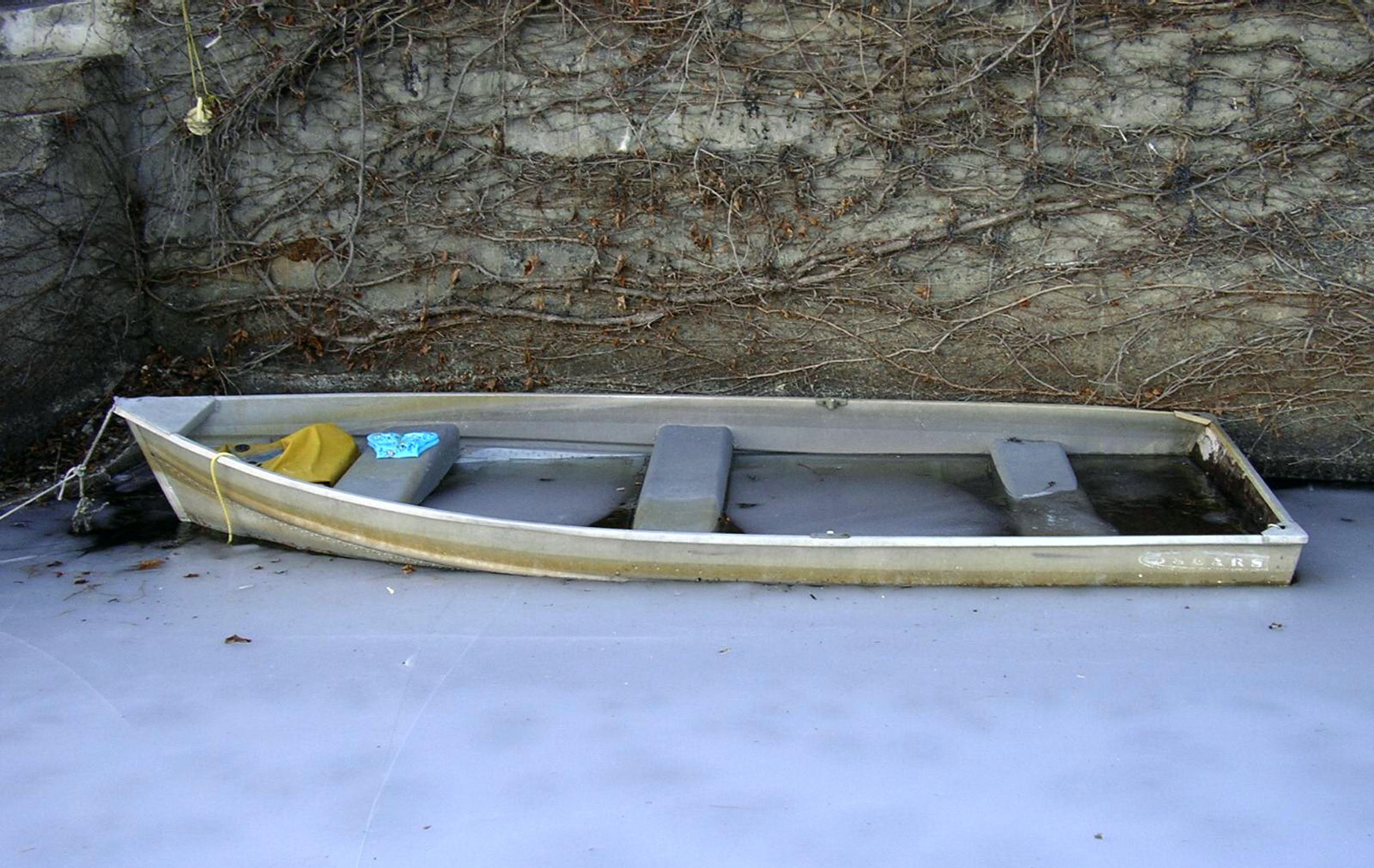 Then, on May 29, strong northwesterly winds drew frigid arctic air into the northeast. David Thomas wrote from Erie, Pennsylvania that “ice covered the water 1/4 inch thick.”
With the arrival of June, more seasonable temperatures returned, offering renewed hope for threatened crops. But the overnight of June 5-6 crushed that optimism, as the temperature again plummeted. The 7 a.m. temperature at Williamstown, Massachusetts that day was 45 degrees Fahrenheit. Not so bad, except that it was also the high temperature for the day.
And that was only the beginning.
On June 7, Waltham, Massachusetts reported a morning temperature of 35 degrees. From Vermont came reports of 5-6 inches of snow with drifts over a foot deep. There are reliable accounts of snow falling from Salem, Massachusetts to as far south as Waltham.
The cold was so intense that birds fell dead in the fields, and newly shorn sheep died of exposure. On June 9, frost was reported in Worcester and on June 10 in East Windsor, Connecticut. The sunrise temperature at Waltham on June 10 was 33 degrees.
Then the arctic air mass passed and for the rest of June, temperatures around the region again reverted to near seasonable levels.
But July was just around the corner.
“The arrival of a cold front during July more often than not is a welcomed event in New England,” Dr. Heidorn notes in his web essay. But when the wind shifted to the northwest on July 6 and temperatures began to fall, memories of recent weather events had New Englanders worried.
With good reason.
 Temperatures in the 40-degree range were reported as far south as Hartford and New Haven, Connecticut. It was worse up north. The frost in Franconia, New Hampshire on July 9 killed the entire bean crop. The damage that the cold, dry summer had wrought on the agrarian society led to legitimate fears of famine in the region.
Then the cold ended and more normal temperatures for the rest of July fed hope that something could be salvaged of the summer crops. But August would squash those hopes once and for all.
Frost in northern New England laid waste to what was left of that corn crop on August 13 and 14. A week later, there was frost in Keene and in Chester, New Hampshire. It was cold enough in Middlesex County to destroy the corn in low-lying areas. Another frost hit central New England on August 28. The next morning, Williamstown, Massachusetts recorded a temperature of 37 degrees.
And then it was Labor Day weekend, everybody had a cookout and summer was over.
So, what ruined the summer of 1816?
For once, it wasn’t the Red Sox.
“The most likely cause was volcanic influences,” Dr. Heidorn writes. Some of the largest eruptions in recorded history occurred in the years just prior to 1816. The theory holds that volcanic dust trapped high in the atmosphere led to increased reflection of solar radiation away from earth.
Proving once again that when it comes to causing climate change, human beings can’t hold a candle to Mother Earth herself.
—
[This column originally appeared in the July 25, 2024 Wakefield Daily Item.]
Filed under: Columns & Essays, History, Humor, Nature & Wildlife, Opinion, Politics, Wakefield | 8 Comments
Tags: 1816, animals, birds, civilization, climate, Climate Change, crops, drought, earth, Eden, electricity, environment, famine, fossil fuels, frost, gas, gasoline, Global Warming, heat, hospitals, Humor, ice, internal combustion engine., invention, Keith Heidorn, Labor Day, lights, Mark Sardella, nature, New England, oil, Opinion, Paradise, planet, Politics, rain, Red Sox, seasons, sheep, snow, summer, sustainability, technology, temperature, Wakefield Daily Item, weather, wind, winter
Flickr Photos


 Mark Sardella
Mark, Your reasoning seems to be as follows: a really big volcanic explosion can cause temperatures to drop all around the globe. Therefore, human activity cannot be affecting the climate in a significant way. This is a non-sequitur. We are dumping billions of tons of CO2 into the atmosphere every year, year after year, and we know that CO2 traps heat at the surface of the Earth and in the lower atmosphere.
There is no question that fossils fuels have conferred many blessings on the human race. But again, it does not follow from that, that there is no down side to the reliance on fossil fuels for energy.
We are between a rock and a hard place — we can’t continue to rely on the source of energy that has made life abundant and comfortable for two hundred years now.
Until the very bright young minds at MIT and Caltech and places like that discover a clean and renewable source of energy, we can at least reduce our consumption of energy. But this would require living more simply, on not so grand a scale. Few people will do this voluntarily, and many people will resist being required to do it.
We aren’t in a good place right now. But pretending that we are in a good place won’t help.
We’ve had a clean and renewable source of energy available for at least 50 years. If the anti-nuclear movement that grew out of the environmental movement hadn’t severely limited our ability to expand nuclear energy, perhaps we’d be in a better “place” already.
I agree, we should have nuclear power too cheap to meter at this point. Still, your example of a volcanic winter almost makes the opposite point of what you’re trying to say — the climate can be massively impacted by an event which we can measure and record.
The problem with research is distinguishing causation and coincidence — does A actually cause B, or is B actually being caused by C, D, & E? Let me give an example I often use in my classes:
Saudi Arabia does not allow women to drive. Saudi Arabia does not have traffic jams. Therefore traffic jams are caused by women drivers. Both facts are true, but it’s only a coincidence — there is not causation there, women drivers are *not* the cause of traffic jams!
Start with the fact that the Sun is an uncontrolled hydrogen bomb (which it essentially is) and since it is uncontrolled, the amount of energy it releases varies. Earlier this summer, it had a “Coronal Mass Ejection”, spitting a whole bunch of extra energy at the Earth. Our magnetic field protected us from it, but do you honestly believe that the related friction didn’t produce heat?
The Earth wobbles in its orbit, and It’s not just the gravity from the Sun & Moon but all the other planets — in fact the whole solar system — that has a minute impact on both the Earth’s orbit and it;s angle toward the Sun. It’s a known fact that there were multiple Ice Ages in the past, that glaciers advanced and retreated all on their own without human-produced CO2 causing it.
At one point, there was ice a mile thick on top of Wakefield — the climate warmed and the ice melted. We don’t know if the current warming isn’t part of the ongoing natural process of the glaciers retreating
We don’t know what an increased CO2 level will actually do because we don’t know if the CO2 will remain in the atmosphere. It dissolves in water (e.g. Diet Coke) and plants use it to grow, both on land and in the ocean — every living thing on the planet exists on the basis of this happening.
There is a lot more that we don’t know, and without answering these unknowns, blaming CO2 for global warming is as sophomoric as blaming women drivers for traffic jams. And that goes into the other issue, the sacrifice of liberty. WHY should we live on “not so grand a scale”?!? Why can’t we demand both — more energy and cleaner energy?
And as to windmills, that was just one blade some 15 miles away from Nantucket — and while the foam is ugly, fiberglass consists of small glass fibers that filter-feeding fish (such as Herring) are likely to ingest. It’s neither going to be healthy for them nor for the bigger fish that eat them.
That was one blade — what do you think will happen when (not if) there is another hurricane like the one in 1938? Or the two in 1954? Or another Blizzard of 1978 putting ice on the blades?
Actually, we have 92 nuclear power plants in this country. They have a good safety record, because they are strictly regulated. Regulation has increased the cost of nuclear power, however, which is one of the reasons we don’t have more nuclear plants.
Another reason has been soft demand for electricity. This is changing, though. Rising temperatures are increasing the use of air conditioning, which gobbles up electricity. And social media and AI are gobbling up electricity, too.
And global warming is causing a lot of people to reconsider their opposition to nuclear power.
So nuclear power may make a comeback, but probably not a big one. Nuke plants always were very expensive to build, way back in the day forty years ago when most of our nuke plants were built. They would be much more expensive to build today, and investors are hesitant to get behind nuclear power because of the difficulty of knowing just how much more expensive.
Please read: The Atlantic – The Global Temperature Just Went Bump
This is the science, not the politics!
Mark, I get it that part of your stock in trade is dragging a stick across the bars of the cages of the self-important and that’s good clean fun if it goes no farther than that. But mis-informing the public, even a small part of it, about a serious public issue is not cool. It appears to me — and correct me if I am wrong — that you have never made a serious effort to understand the scientific reasons for the concern about climate change. Your column is nothing more than recycled talking points originally put out by the PR machines of the fossil fuel industry. With your writing talent, you could be informing the public. Why not?
Great article, keep it up.