Minority leaders
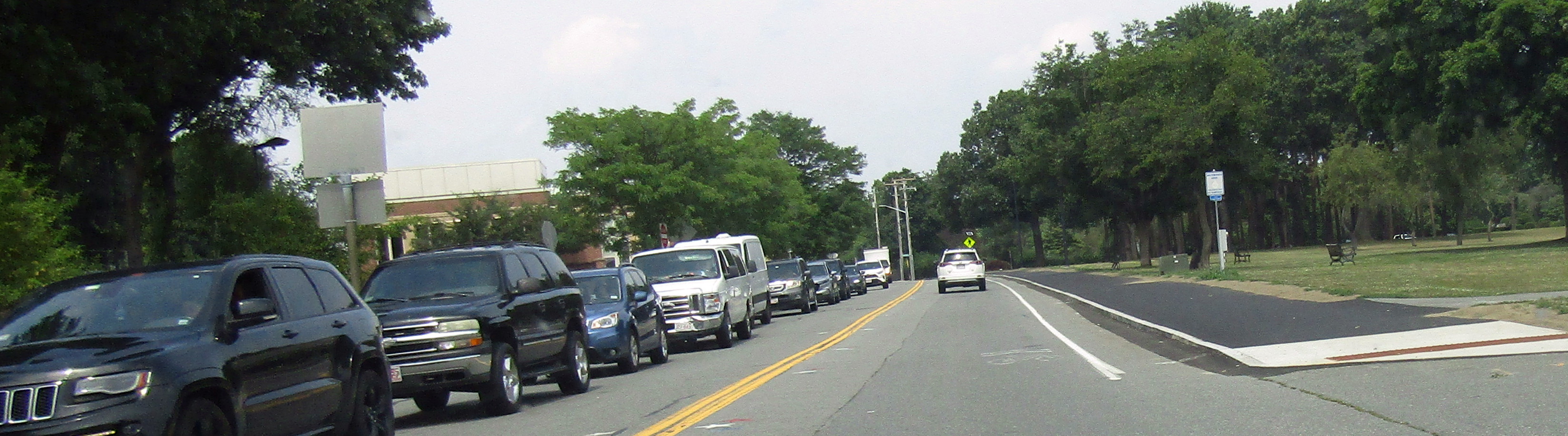
The vast majority of people use cars to get around. Only a tiny minority ride bicycles.
So naturally, Wakefield is in the process of taking nine feet of driving lane away from motorists in order to create a separate lane for bicycles on North Avenue.
Drivers are already noticing how much narrower North Avenue is due to the new 10-foot-wide sidewalk. (Excuse me, “shared-use path.”) Just wait until they get a load of the coming six-foot wide bike lane and three-foot “buffer zone,” which will reduce the width of the automobile travel lanes on North Avenue to just 11.5 feet in each direction.
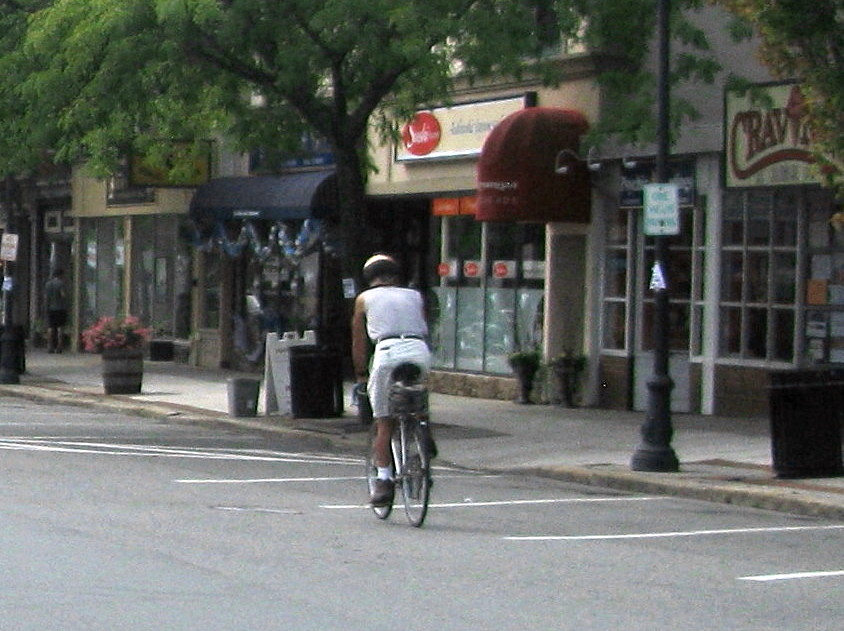 It’s emblematic of our current culture of catering to the smallest segments of the population, whether it’s cyclists or some other interest group. Nobody’s interests should be dismissed. But this blind spot to the interests of motorists signals trouble. This is a decision driven not by popular sentiment but by ideology. It’s the climate-based, anti-automobile movement on full display.
Naturally, they deny that they hate cars. But this same anti-automobile sentiment was behind another recent, wildly unpopular measure: Massachusetts General Law Chapter 40A, forcing all MBTA communities to create a multifamily zoning district near the train or bus line. The state made no effort to hide that it was an anti-automobile statute.
“Multi-family housing near transit creates walkable neighborhoods with climate and transportation benefits,” according to a state website, including “reduced reliance on single-occupancy vehicles.”
Meanwhile, thinking she was speaking to a friendly group, Massachusetts’ new Secretary of Transportation recently let the cat out of the bag. She called for increased taxes, tolls  and fees on automobiles and disparaged the average SUV or pickup truck owner as “someone who wants to drive basically an 18-wheeler as their personal car.”
Considering that SUVs and pickup trucks make up over 80 percent of new vehicle sales in the United States, that’s a lot of people driving “18-wheelers” as their personal cars. (Let the record show that I drive a Mazda3 sedan, because I care about the planet.)
They deny hating cars, but they apparently do hate art, history and golf, as violent climate protesters have recently targeted golf tournaments, Stonehenge and priceless museum pieces.
In a classic example of projection, they accuse drivers of hostility toward cyclists. But far from hating bikes, most drivers are wondering why we are dedicating huge chunks of roadway real estate to these seldom-seen two-wheelers.
How did it come to this?
In the case of North Avenue, it goes back to 2022, when the town was awarded a state grant for roadway improvements that included $500,000 for a new shared-use path and bike lane.
If this is an example of the kind of grant money the town stands to lose if we reject MBTA multifamily zoning or decline to be a “Climate Leader Community,” that sounds like addition by subtraction to me and a win-win for the motoring majority.
Local advocates claim that there is broad popular support for bike lanes. Maybe they even believe it. Remember when they told us that most people wanted to get rid of the outdated and “offensive” Warrior logo?
Let’s put bike lanes on the ballot and see how that goes.
—
[This column originally appeared in the July 11, 2024 Wakefield Daily Item.]
Filed under: Art, Columns & Essays, Community, Humor, News, Opinion, Politics, Wakefield | 2 Comments
Tags: 18-wheelers, Art, automobiles, ballot question, bicycle lanes, bike lane, cars, climate, Climate Leader Communities, cyclists, ecology, environment, golf, Humor, majority, Mark Sardella, Massachusetts, MBTA, museum, Opinion, pickup, Politics, roads, Stonehenge, sustainability, SUV, truck, two-wheeler, vote, Wakefield Daily Item, Wakefield Warrior
Flickr Photos


 Mark Sardella
“Government is not the solution it is the problem” Ronald Reagan.
We all need government; problem is we have just far too much of it, and it is a self-serving government always telling us how to live our lives.
Let’s consider the possible good and bad of bicycle lanes.
Bad: Less room for cars makes driving a pain in the posterior; no one uses bicycle lanes, making them a waste of money.
Good: Riding bicycles is safer; lots of people use bike lanes, promoting health and reducing automobile traffic. Bicycles don’t mix with pedestrian traffic around Lake Q.
False issues: Government tyranny. Government can’t hold a plebiscite every time it wants to do stuff. But the voters have the opportunity, at short, regular intervals, to vote the rascals out.